
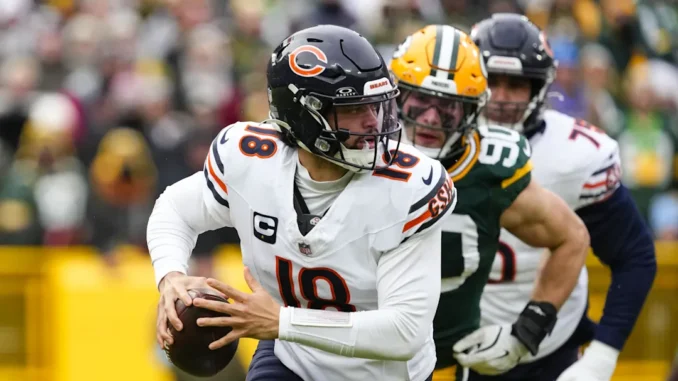
The buzz around Caleb Williams entering the 2025 NFL season is palpable. As the Chicago Bears’ young quarterback continues to develop in the league, expectations are naturally high. ESPN analyst Mike Clay recently projected a modest statistical boost for Williams next season, signaling some improvement but stopping short of declaring a breakout campaign. The question on everyone’s mind: Will this incremental jump be enough for Williams to truly establish himself as a franchise quarterback and a rising star in the NFL? Let’s dive into the numbers, the context, and what factors could shape Caleb Williams’ 2025 season.
A Snapshot of Caleb Williams’ Rookie Year
Before dissecting the projections, it’s crucial to understand where Caleb Williams stands coming off his rookie year. Selected in the first round of the 2024 NFL Draft, Williams arrived with significant hype after a decorated college career. During his rookie season with the Bears, Williams put up solid but not spectacular numbers:
Passing yards: 3,541
Touchdowns: 20
Interceptions: 6
Completion percentage: 62.5%
Passer rating: 87.8
These stats are respectable for a first-year quarterback adjusting to the speed and complexity of the NFL. However, Williams faced his share of challenges, including a porous offensive line that allowed a league-high 68 sacks and a receiving corps still in transition. These hurdles contributed to an inconsistent rookie campaign where flashes of brilliance were often tempered by growing pains.
The ESPN Projection: A Modest Step Forward
Mike Clay’s latest projections suggest a small but measurable improvement in Williams’ performance:
Passing yards: 3,538
Touchdowns: 23
Interceptions: 13
Completion percentage: 64.6%
Passer rating: 89.1
At first glance, these numbers reveal a mixed bag. Williams is forecasted to increase his touchdown count by three and his completion percentage by about two points — positive developments. However, the projection also includes a jump in interceptions from 6 to 13, which could raise concerns about decision-making or offensive struggles. Notably, his projected passing yards remain essentially flat compared to his rookie season, which might suggest limitations in growth or offensive scheme constraints.
Why the Conservative Projection?
So why does ESPN’s analysis predict only a small boost rather than a breakout? Several factors contribute:
1. Coaching Changes and Offensive Schemes
The Bears have brought in Ben Johnson as their new head coach, a move widely praised for Johnson’s offensive expertise and ability to develop quarterbacks. However, new coaching regimes often require an adjustment period. While Johnson’s system is expected to enhance the Bears’ offensive capabilities, the early stages of implementation may lead to some growing pains.
Williams must learn a new playbook, adapt to Johnson’s style, and build chemistry with his offensive staff. ESPN’s projection likely accounts for these transitional challenges, tempering expectations for a giant leap in production.
2. Offensive Line Improvement Still a Work in Progress
One of the biggest hindrances to Williams’ rookie season was the offensive line’s inability to protect him. Being sacked 68 times is a brutal test for any young quarterback. While the Bears have made efforts to bolster their offensive line through the draft and free agency, the unit is not yet elite.
Increased pressure often results in rushed throws, sacks, and turnovers. ESPN’s forecast reflects skepticism about the line’s ability to reduce pressure substantially in 2025, limiting Williams’ statistical growth.